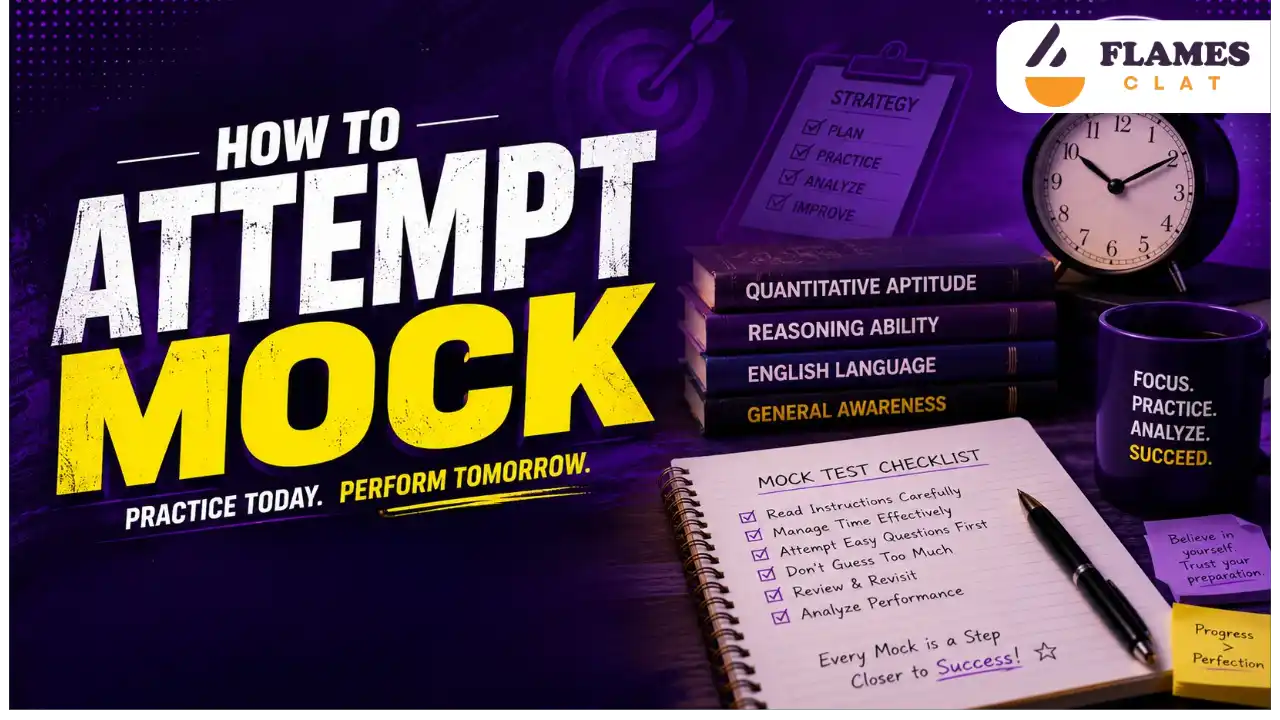
Mock tests seem like a big deal for preparing for competitive exams, but for someone just starting out, they can really make you nervous instead of helping much. A lot of beginners put off taking them because they worry about getting bad scores, or they jump in without any plan and do not learn a thing. I think the main point for new people is to use them for figuring things out and getting a sense of where you stand, not to try and be perfect right away. If you get how to do mocks properly from the beginning, it can speed up how fast you improve.
Why Beginners Should Start with Mock Tests Early?
One thing about starting mock tests early is it gives you a sense of the real exam, like the patterns in it and how tough the questions really feel, along with the pressure from the clock and what each part expects. You know, that time crunch part. If you begin soon, then later on you will not be caught off guard, and it helps figure out your strong spots and the areas that still need fixing, all way ahead of the actual test day. Some might think holding off is smarter, but I am not sure, it probably just makes spotting those weaknesses take longer. Mocks also get you used to sitting there focused for a long time, which is super important for something like CLAT. Those low scores at first, they are just okay, sort of like a checkup to see what is wrong, not some big failure.
When Should a Beginner Start Attempting Mocks?
Beginners probably need to jump into sectional or mini mocks right after they get a basic handle on the syllabus. That way they are not totally lost from the start. Full length ones can come in later, slowly, and it does not matter if the whole syllabus is not covered yet. The main point here is not to get everything right, but just to see how the questions are set up and how the time slips away in the exam.
FLAMES CLAT thinks waiting until you feel completely ready before trying any mocks just holds you back more. It seems like that complete preparation idea is what trips a lot of people up.
How to Attempt a Mock Test?
When do you even begin with these? Once you have a basic idea of the syllabus, beginners should go for sectional mocks or the shorter ones. You can ease into full length ones even if you have not covered everything yet. The whole idea here is not to nail every question, but to see how the problems are worded and how the time slips away in the exam. Holding off until you think you are totally ready usually just slows everything down, is what we feel, so visit www.flamesclat and book a session to get a cpmplete roadmap!
Approaching a mock test, beginners need the right headspace, treating it more like practice to learn from rather than some test of how smart you are. Do it in a quiet spot, with a timer to make it feel real. Avoid stopping to look at answers or anything in the middle, because that messes up building up your stamina for the exam. It is kind of tricky at first.
Which section and when?
For strategy by sections, do not stress about getting to every single question. Pick the ones you know and aim for getting them right, skip the confusing or slow ones. Skim the whole paper in first 2-3minutes at max, decide your go-to section, a section where you feel you can fetch most of your marks and which you can complete the fastest. So, that you are left with more time later which keeps you mentally calm.
It is fine to leave some blank when you are new, that is normal. As you keep going, you get better at picking what to do, and it helps cut down on freaking out. Confidence comes from that over time.
The Most Important Step
For beginners, analysis is more important than the mock itself. Spend time going over each part, figure out why you missed stuff, see where your knowledge has holes, notice if time was the problem, and watch for mistakes that keep happening. A basic log of errors could track those patterns so you do not mess up the same way again. That part gets a bit messy to explain fully.
Get yourself a notebook or diary where you keep a track record of your analysis, do it section wise and then topic wise. Filter out your strengths and weaknesses. The same could be done on a excel file or a word file too. All that is important is a track record from where you began to your current situation, this will help you know the area of improvements.
How Many Mocks Should Beginners Take?
Beginners often wonder how many mock tests they should try. I think starting with just one per week makes sense, especially if you really dig into what went wrong after. Quality is way more important than doing a ton of them, because without that analysis, you might not get better at all. As you get more comfortable, maybe you can do more, like bumping it up a bit.
Common Mistakes you may Make While Attempting Mocks
It feels like a lot of people mess up by comparing their scores to friends or whatever, and that just makes you feel bad without helping. Others skip the review part or keep taking the same mocks without fixing errors, which seems pointless. Then there are those who freak out over low scores and quit mocks entirely. Avoiding that stuff is key, since mocks are supposed to help you prepare, not make you want to give up.
How Mocks Help Build Exam Confidence?
Mocks can really build confidence if you stick with them and look at what happened each time. You start getting faster and more accurate, and it helps with keeping calm during the actual thing. Getting used to how the exam looks cuts down on the nerves, and seeing similar questions over and over makes decisions easier when time is short. Over time, they go from scary to something you can rely on to see where you stand.
Final Advice
The thing is, high scores right away are not the point at the beginning. Its more about figuring out how to improve step by step. If you see mocks as ways to learn instead of just judging yourself, that gives you an edge over others. Patience and doing them regularly, plus being honest about your mistakes, is what makes them useful.
Some people see it one way, but I am not totally sure if everyone needs the exact same approach. That part gets a bit messy, like how much analysis is enough. In the end, learning to do mocks right is a skill on its own. With a good mindset and some structure, plus really going over everything, they can be the main thing that helps you succeed long term.
FLAMES CLAT 2027 mock test series
The Flames CLAT & AILET Mock Test Series is created especially to assist students at various stages of preparation, particularly those who are just starting out. The format, difficulty level, passage structure, and time constraints of these mocks closely resemble those of the real CLAT and AILET exams. Students are able to comprehend not only the right answer but also the reasoning behind it because each mock comes with comprehensive solutions and post-test analysis. Additionally, the series makes mock-taking an organized learning process rather than a complicated exercise by helping thestudents progressively develop exam temperament, enhance section-wise strategy, and monitor performance trends over time.
The series can be bought from our website, we provide our students 50+ full-length CLAT mock tests and 20+ full-length AILET mock tests as part of the CLAT + AILET Test Series, along with 100+ sectional and 100+ topic-wise tests for targeted practice and concept reinforcement.
JOIN FLAMES CLAT COACHING NOW! flamesclat.com, +917371845985
Test Your Preparation with FLAMES CLAT!
Understanding concepts is only the beginning—consistent practice is what turns preparation into success.
If you're serious about cracking CLAT 2027, put your preparation to the test with our FREE Monthly CLAT Quiz. Curated by experienced mentors, the quiz is designed to help you assess your strengths, identify areas for improvement, and experience questions that reflect the latest CLAT pattern.
📝 Attempt the FREE Monthly CLAT Quiz:
https://www.flamesclat.com/monthly-quiz
At FLAMES CLAT, we're committed to helping every aspirant prepare smarter through expert mentorship, comprehensive study resources, mock tests, current affairs updates, strategy sessions, and daily practice content.
Stay connected with us and take your preparation to the next level:
▶️YouTube: https://www.youtube.com/@flamesclat
📲 Telegram Community: https://t.me/WH6RLT10jpAmH3XR
Your journey to a top National Law University starts with the right guidance and consistent effort. Join the FLAMES CLAT community today and take the next confident step towards achieving your CLAT 2027 dream.